
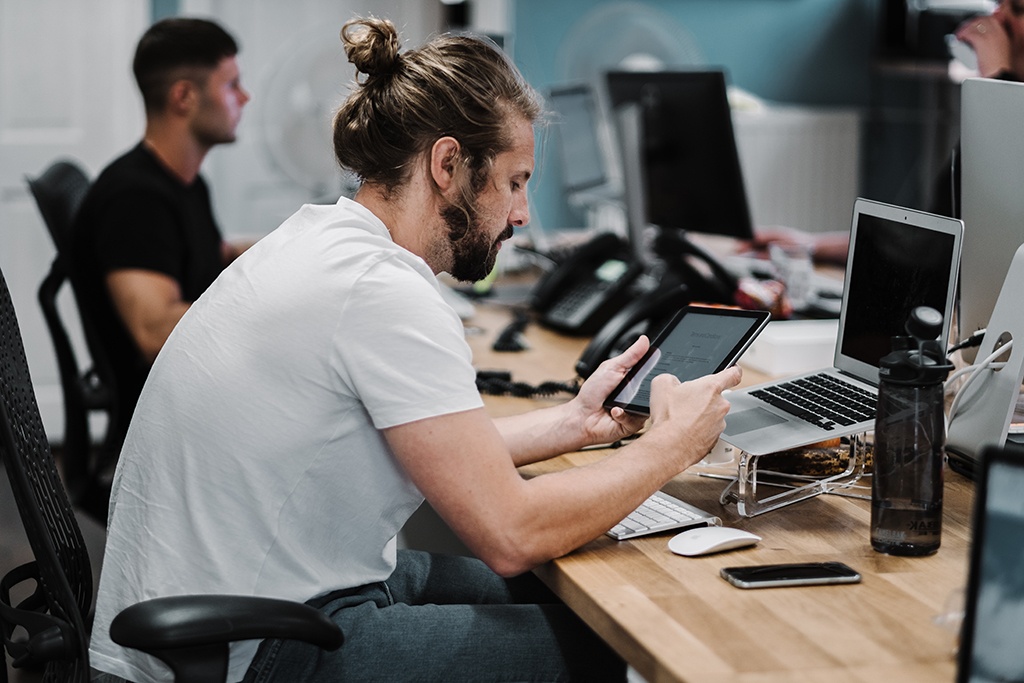
While the lockdown has put something of a dampener on the occupational market nationally, what we are certainly seeing all around the world is an acceleration of the trend for “agile space” – with flexible leases and the potential for enterprises to expand or contract quickly as their circumstances dictate.
Equally, companies are looking to increase occupational densities, in order to reduce overheads and exposure in an uncertain market – and are now far more relaxed about letting staff work part of their time at home. The technology to meet virtually and collaborate remotely is has suddenly become mainstream.
There is also plenty of evidence to suggest that younger people are far more attuned to working in a less structured way – in cafes, at home, on the tube – than their older managers, preferring a very different work/life balance. They also want to work in more congenial surroundings. And they certainly don’t want to be doing long commutes which keep them away from home.
So shared workspace – enabled by technology that allows people to book desks, workspaces or meeting rooms, remotely – will radically reduce overall requirements. Critically, the sort of space businesses will be looking for will not just comprise serried ranks of desks, but contain the huddle spaces, coffee bars and break out areas where the important work is often achieved: collaboration.
Equally, the old concept of “uses” is rapidly being eroded. The appetite now is for the vibe of a mixed-use business community.
Changing times, changing uses…
And that’s where smart investment is now going: space which can be used far more fluidly to meet the needs of today’s businesses, and where “categories” don’t really matter. Regardless of your business, you may well prefer to work in a converted warehouse, chapel or cotton mill than a conventional office or industrial unit.
Applying the principle of “core and flex” will allow businesses unsure of the future or dependent on short term or seasonal contracts to minimise their costs.
Long leases are out. Mixed uses are in, and so are less conventional working environments. Co-working is here for the foreseeable future.
Amidst all the doom and gloom, the history books will surely have at least some space to record that 2020 was the year when the way we worked changed forever.