
Where would be your ideal place to work? An ultra-modern structure soaring into the sky like the Gherkin or The Shard? How about a converted barn or cotton mill… quirky, characterful and rich in heritage?
How about a mediaeval monastery? No, it probably isn’t on your wish list, any more than it was on mine – until a journalist friend explained a theory to me recently that a monastery was a perfect place to work.
Medieval monks, it goes without saying, were renowned for getting up at the crack of dawn and labouring long and hard, sometimes without speaking to each other – so that part of their tradition doesn’t hold a great deal of appeal for many of us… and it might not prove highly efficient.
But stay with me here as it gets very interesting – and points to ways in which many current workplaces could be enhanced.
A typical monastery had quite a few different areas where the occupants could work, connect and relax, and they would move in between them during the day.
For instance:
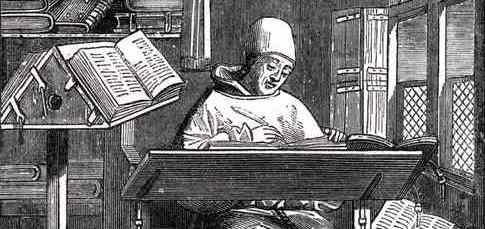
- The Scriptorium – used for clerics or scribes would concentrate in order to copy and translate manuscripts
- The Chapter-house – where monks met up to hold discussions
- The Cloisters – the covered walkways where monks would walk up and down thinking and (if they bumped into someone) to share their thoughts and debate
- Misericord – a place where the usual rules were relaxed and the monks could enjoy themselves
- Refectory – the dining hall, where those orders which were NOT silent could meet and talk convivially
How this translates…
Workspaces have evolved dramatically in the last few decades, and employers (and employees) now look for something far more conducive to creativity and productivity than sterile open offices with individuals or teams closed off by partitions… the bosses tucked away in their own offices. Perhaps a coffee machine rendering tasteless drinks and a wilting potted plant in the corner…
We now recognise that everyone needs some thinking time on their own (in monkish terms, a scriptorium, or even their own cell) but there also has to be a meeting place where ideas can be exchanged (Chapter House), and somewhere to encourage serendipitous exchanges (Cloister), not to mention an amenity area where staff can unwind (Misericord). Ideally too, somewhere (Refectory) serving half decent food!
No one (from any century) can work productively in one gear, in one location and in isolation. And workspace designers are realising how just a little thought and imagination can help freshen people’s minds, and make work more enjoyable as well as more productive.
And this isn’t just about efficiency: today’s race for talent makes it imperative for employers to offer somewhere attractive to work in order to help them recruit and retain a far more fickle workforce.